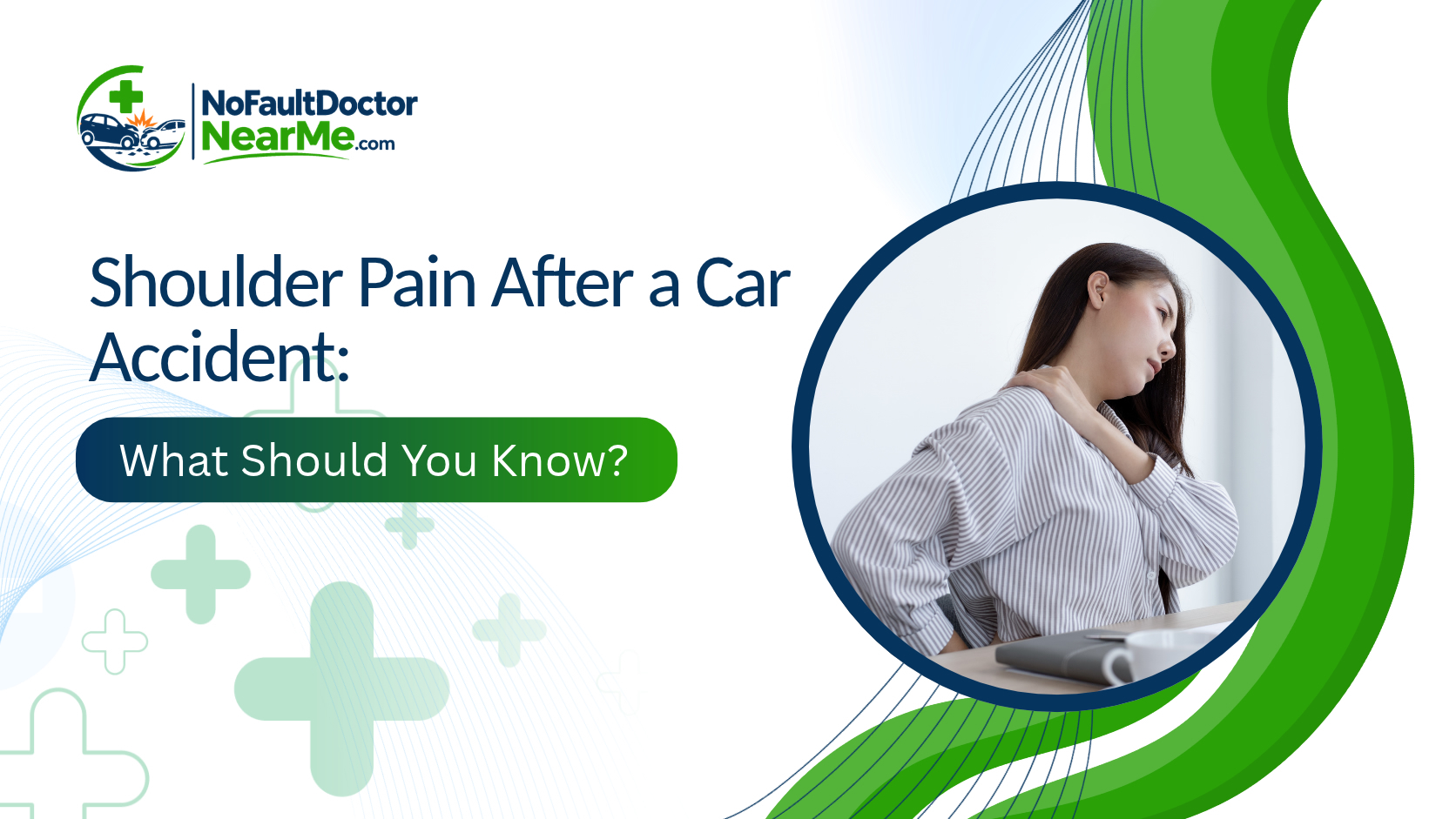
A car accident can affect more than just your vehicle. Even a collision that initially seems minor can leave you experiencing discomfort, stiffness, or difficulty moving your shoulder. Sometimes, the pain appears immediately. In other situations, symptoms develop hours or days after the accident.
Shoulder pain after a car accident can have several possible causes, ranging from muscle strain to injuries involving the rotator cuff, ligaments, or shoulder joint. Understanding your symptoms and seeking an appropriate medical evaluation can help you determine what steps to take next.
If you have experienced shoulder discomfort following a motor vehicle accident in New York, this guide explains common causes, symptoms to watch for, medical evaluation options, and how No-Fault insurance may apply.
Why Does Shoulder Pain Occur After a Car Accident?
During a collision, your body may experience sudden movement or impact. Your shoulder can be affected by the seat belt, steering wheel, vehicle door, or the force of your body moving against the seat.
Even when there is no direct impact to the shoulder, the sudden movement may place stress on the surrounding muscles, tendons, ligaments, and joints.
Some common reasons for shoulder pain following an accident include:
- Muscle strain: Sudden movement can stretch or irritate the muscles around the shoulder, resulting in discomfort and restricted movement.
- Rotator cuff injuries: The rotator cuff is a group of muscles and tendons that helps stabilize and move the shoulder. An accident may contribute to a strain or tear.
- Ligament injuries: Ligaments connect bones and help stabilize joints. A sudden impact or forceful movement may injure these structures.
- Shoulder dislocation: A strong impact can cause the upper arm bone to move out of its normal position within the shoulder joint.
- Shoulder fractures: Certain collisions can result in fractures involving the collarbone, upper arm bone, or shoulder blade.
- Soft tissue injuries: Damage or irritation involving muscles, tendons, and other soft tissues may cause pain, tenderness, and swelling.
The exact cause cannot be determined from symptoms alone. A qualified healthcare professional can evaluate the shoulder and recommend appropriate examinations.
Common Symptoms of Shoulder Pain After a Car Accident
Shoulder injuries do not affect everyone in the same way. Symptoms may depend on the type and severity of the injury.
Some common symptoms include:
- Pain when lifting or rotating your arm.
- Stiffness around the shoulder joint.
- Swelling or tenderness.
- Difficulty reaching overhead.
- Discomfort while sleeping on the affected side.
- Reduced shoulder movement.
- Weakness when carrying or lifting objects.
- Pain extending toward the neck or upper arm.
You may also experience discomfort when performing everyday activities such as getting dressed, driving, reaching for objects, or carrying groceries.
Pay attention to new or worsening symptoms after an accident. Severe pain, visible deformity, sudden weakness, or an inability to move the arm requires prompt medical assessment. Chest pain, difficulty breathing, or other potentially serious symptoms require emergency attention. Call 911 when necessary.
Can Shoulder Pain Develop Days After a Car Accident?
Yes. Some people do not notice shoulder discomfort immediately after a collision. Adrenaline and the initial stress of an accident may affect how pain is perceived.
As the body settles after the incident, symptoms such as stiffness, tenderness, and restricted movement may become more noticeable.
However, delayed pain should not automatically be assumed to be minor. If shoulder discomfort develops after an accident, consider arranging a medical evaluation. This is particularly important if the pain becomes worse or interferes with normal activities.
Keep track of when the symptoms started, which movements cause discomfort, and whether the condition changes over time. This information can help your healthcare provider understand your concerns.
Which Doctor Should You See for Shoulder Pain After a Car Accident?
The appropriate healthcare provider depends on your symptoms, medical history, and examination findings.
Different specialists may evaluate different types of shoulder-related conditions.
- Orthopedic Doctor
An orthopedic doctor evaluates conditions involving bones, joints, muscles, tendons, and ligaments. If you have persistent shoulder pain, restricted movement, or a suspected structural injury, an orthopedic evaluation may be appropriate.
- Primary Care Doctor
A primary care doctor can perform an initial assessment, review your symptoms, and determine whether additional testing or specialist evaluation may be necessary.
- Pain Management Doctor
If shoulder discomfort continues, a pain management doctor may evaluate the condition and discuss appropriate pain management options based on the diagnosis.
- Physical Medicine and Rehabilitation Doctor
A physiatrist specializes in physical medicine and rehabilitation. This provider may assess movement-related problems and help coordinate non-surgical rehabilitation when appropriate.
- Physical Therapist
A physical therapist may help address limitations in shoulder movement, strength, and function through an individualized rehabilitation program when recommended by an appropriate healthcare professional.
Not everyone with shoulder pain needs to see multiple specialists. The appropriate evaluation and care plan depend on the individual injury.
How Is a Shoulder Injury Evaluated After a Car Accident?
A medical evaluation helps identify possible causes of shoulder discomfort and determine whether additional testing is necessary.
During an appointment, a healthcare professional may:
- Ask how the accident occurred.
- Review when the shoulder pain started.
- Discuss previous shoulder injuries or medical conditions.
- Examine shoulder movement and range of motion.
- Assess tenderness, strength, and other physical findings.
- Recommend imaging or additional testing when clinically appropriate.
Depending on the suspected injury, imaging may include X-rays, MRI, or ultrasound. Each test serves a different purpose, and the healthcare professional determines whether it is necessary.
Be prepared to explain whether the shoulder struck an object during the collision, whether you were wearing a seat belt, and which movements cause discomfort.
How No-Fault Insurance May Apply to Shoulder Injuries in New York
If your shoulder injury occurred in a motor vehicle accident in New York, you may be eligible for benefits under your applicable No-Fault auto insurance policy.
New York No-Fault insurance, also known as Personal Injury Protection (PIP), generally helps cover eligible medical expenses and certain other basic economic losses resulting from a covered motor vehicle accident.
Basic No-Fault coverage generally provides up to $50,000 per person for basic economic loss, subject to applicable policy terms and legal requirements.
When seeking medical care, it is important to understand whether the provider accepts No-Fault insurance and what documentation may be required.
Some important points to remember:
- Report the accident to the appropriate insurance company.
- Understand the applicable No-Fault claim submission requirements.
- Keep your claim information and relevant medical records organized.
- Ask the provider’s office about its No-Fault billing process.
- Confirm coverage and any additional requirements with your insurer.
A provider accepting No-Fault insurance does not automatically guarantee that every service will be covered or paid for. Coverage depends on the policy, claim circumstances, applicable rules, and insurer determination.
How NoFaultDoctorNearMe.com Helps You Connect With a No-Fault Doctor
Finding an appropriate healthcare provider after an accident can be challenging, particularly when you are also managing insurance-related responsibilities.
NoFaultDoctorNearMe.com helps patients seeking medical care after motor vehicle accidents connect with appropriate doctors in its network who accept No-Fault insurance in New York.
If you are experiencing shoulder discomfort and searching for a no fault doctor near me, you can submit an appointment request through the website.
Here is how the process works:
- Submit an appointment request: Visit NoFaultDoctorNearMe.com and provide the requested information about your appointment needs.
- Request review: Our team reviews the submitted information and considers your location and request.
- Direct provider contact: The doctor or their office contacts you directly to discuss appointment availability and relevant details.
- Appointment confirmation: Your appointment is confirmed only after the doctor or their office directly confirms it with you.
Submitting a request does not automatically mean an appointment has been scheduled. The doctor or their office will provide confirmation directly.
Whether you are looking for a no fault doctor for an accident-related concern or trying to connect with appropriate car injury doctors near me, NoFaultDoctorNearMe.com helps coordinate the initial appointment request.
Conclusion
Shoulder pain after a car accident can result from different types of injuries, including muscle strains, ligament injuries, rotator cuff problems, and fractures. Symptoms may appear immediately or develop over the following days.
Do not ignore persistent or worsening discomfort. Seek an appropriate medical evaluation, follow the healthcare professional’s recommendations, and keep your accident-related medical and insurance information organized.
Looking for a No-Fault doctor near you? Submit an appointment request through NoFaultDoctorNearMe.com. Our team will coordinate your request with an appropriate nearby doctor in our network.
Frequently Asked Questions
- Why does my shoulder hurt after a car accident?
Shoulder pain may result from muscle strains, ligament injuries, rotator cuff problems, fractures, or other accident-related conditions. A medical evaluation can help identify the possible cause.
- Can shoulder pain start days after a car accident?
Yes. Some symptoms may become noticeable hours or days after a collision. If you develop new or worsening shoulder discomfort, consider seeking medical evaluation.
- Should I see an orthopedic doctor for shoulder pain after a car accident?
An orthopedic doctor may be appropriate when shoulder pain involves restricted movement, persistent discomfort, or a suspected injury involving bones, joints, tendons, or ligaments. The right provider depends on your symptoms and medical evaluation.
- Does No-Fault insurance cover shoulder injury treatment in New York?
Eligible medical expenses related to a motor vehicle accident may be covered under New York No-Fault insurance, subject to policy limits, medical necessity, claim requirements, and insurer determination.
- Can I find a No-Fault doctor near me for shoulder pain?
Yes. You can submit an appointment request through NoFaultDoctorNearMe.com. Our team reviews your request and coordinates it with an appropriate nearby doctor in our network who accepts No-Fault insurance. The doctor or their office contacts you directly to discuss availability and confirm the appointment.
- What information should I provide when requesting an appointment?
Provide the requested contact, location, accident, and appointment-related information. Keep your insurance details and No-Fault claim information available if requested. The doctor’s office can explain any additional documents needed.
- How long does shoulder pain last after a car accident?
Recovery time varies depending on the type and severity of the injury and individual health factors. Some injuries improve over a relatively short period, while others may require longer evaluation and rehabilitation. Follow the recommendations of your treating healthcare professional.
Disclaimer: This article is for general informational purposes only and is not medical, legal, or insurance advice. NoFaultDoctorNearMe.com is a No-Fault doctor network and appointment coordination service. It does not provide medical treatment or guarantee appointment availability, insurance coverage, or claim approval. Insurance benefits are subject to applicable policy terms and New York law.